Supplier Diversity Case Study

Atlanta Housing Authority

Why One Supplier Diversity Analyst Brings B2Gnow Wherever He Goes

View the case study to hear how Gabriel DeVougas, Supplier Diversity Analyst at the Atlanta Housing Authority, has championed the use of B2Gnow across three separate organizations over his career—also including the City of Milwaukee, Milwaukee Housing Authority, and now Atlanta Housing.

  • At Atlanta Housing, B2Gnow is being implemented to support outreach and track labor hours, continuing a pattern of success seen at previous agencies.

  • Favorite Feature: The intuitive online tools allow for efficient contractor training and streamlined payroll submission, eliminating the need for in-person consultants or complex processes.
  • Impact: Atlanta Housing leverages B2Gnow to strengthen engagement with the contractor community and simplify compliance tracking—benefiting from a platform frequently recommended by professionals with firsthand experience at previous organizations.

Make compliance easy. Make a difference in the community.

Discover how our vendor management, prevailing wage labor compliance, and grant management software solutions help you streamline processes and allow you to deliver greater impact to your community.


Overcoming 8 Prevailing Wage Obstacles: A Tech Guide for Government Agencies

Government agencies face significant challenges in managing prevailing wage labor compliance, certified payroll reports, and adhering to Davis-Bacon requirements. Strict regulations, frequent law changes, and the need for accurate reporting require constant oversight. Fortunately, comprehensive technology solutions can significantly alleviate these burdens by streamlining compliance, mitigating risk, enhancing accuracy, and ensuring timely reporting.

Let’s explore the most common concerns for government agencies—and how leveraging technology can help alleviate them.

  1. Navigating the Complexity of Prevailing Wage Regulations
    Prevailing wage laws can vary significantly across states, counties, or even municipalities. For government agencies overseeing projects in multiple regions, keeping up with local regulations and ensuring compliance can be overwhelming. These laws also change frequently, adding another layer of complexity.

    A comprehensive prevailing wage software platform, such as eComply, can simplify this process by automating compliance with varying local, state, and federal wage laws. By providing up-to-date information and handling regulatory updates automatically, agencies can effectively manage compliance across multiple jurisdictions.
  2. Ensuring Accurate Certified Payroll Reports
    Certified payroll reports require precise tracking of workers’ wages, hours, job classifications, and other essential data. The inability to check and verify every submitted certified payroll report can lead to underpaid workers, continued reliance on bad contractors, and ultimately, poor project execution.

    A comprehensive labor compliance software can automate the collection, verification, and submission of certified payroll reports, ensuring every area of non-compliance is highlighted for agency review.
  3. Aggregating and Reporting Payroll Data Accurately
    Certified payroll reports are often required on a weekly or bi-weekly basis. Government agencies must collect data from contractors and subcontractors, track hours worked, and ensure that all information is consistent and accurate, often from numerous sources.

    The real challenge for agencies lies in aggregating and reporting this data effectively. With technology, agencies can automate the collection of payroll data, centralize it, and generate accurate and comprehensive reports with up-to-date information. This reduces the risk of errors and ensures that reports are generated in a timely manner, enabling agencies to stay compliant and informed without manually sorting through large datasets.
  4. Managing Subcontractor Compliance
    On large projects, subcontractor compliance is a major concern for government agencies. In addition to managing the prime contractor, there could be hundreds of subcontractors also attached to a project. Agencies must ensure that all subcontractors are also in compliance with prevailing wage laws and that their certified payroll records are submitted correctly.

    A centralized software platform can integrate subcontractor payroll data into the agency’s system. This ensures that all parties are compliant, helping agencies manage subcontractor reports more effectively and efficiently.
  5. Dealing with Wage Theft Allegations
    Wage theft claims can arise when workers believe they haven’t been paid according to prevailing wage laws. Government agencies must address these allegations promptly to avoid legal issues and public backlash.

    With technology, agencies can access detailed payroll records to investigate and resolve disputes quickly. A transparent system provides a comprehensive record of wages and hours worked, as well as a detailed record of all communications, thereby helping agencies protect themselves against wage theft claims and ensuring proper payment.
  6. Facing Audits and Investigations
    Government audits can occur at any time, and agencies face the potential consequences of non-compliance, including fines, delays, or the loss of funding. Auditors carefully examine payroll records for misclassified workers, incorrect wages, or missing documents.

    A fully integrated, transparent record-keeping system simplifies audits by maintaining a secure, centralized history of payroll reports, wage determinations, and related correspondence. Automated, audit-ready reports and features, such as timestamps and version histories, enable agencies to respond quickly and confidently, minimizing risk and improving audit efficiency.
  7. Ensuring Proper Worker Classifications
    Misclassifying workers is a key compliance issue. Incorrect classifications can result in underpayment, fines, and legal disputes. As job duties evolve during a project, ensuring proper worker classifications is crucial.

    With technology solutions that track job roles and worker changes, agencies can ensure workers are classified correctly throughout the project, reducing the risk of misclassification and ensuring compliance with prevailing wage laws.
  8. Modernizing Systems and Ensuring Integration Across Compliance Programs
    Many government agencies still rely on manual or disconnected systems to manage various aspects of compliance, such as certified payrolls, workforce tracking, and supplier diversity efforts. This fragmented approach can lead to data inconsistencies, reporting delays, and increased risk of non-compliance.

    Upgrading to a modern, scalable labor compliance platform helps agencies reduce human error, centralize documentation, and maintain compliance more efficiently. The ideal solution should integrate seamlessly across programs and systems, enabling shared access, contract syncing, and unified reporting. For example, the eComply platform can connect prevailing wage tracking with the B2Gnow Supplier Diversity system, providing agencies with a single, streamlined interface to manage all compliance efforts and improve project oversight.

Conclusion
Government agencies face significant challenges when managing prevailing wage labor compliance, certified payroll requirements, and adhering to Davis-Bacon regulations. With complex regulations, tight deadlines, oversight of contractors and subcontractors, and the potential for audits or wage theft claims, it’s no wonder agencies are seeking solutions to simplify the process.

By leveraging technology, agencies can streamline compliance tracking, enhance reporting accuracy, and reduce administrative burdens while staying abreast of regulatory changes and mitigating risk.

Staying Ahead of the Curve: Navigating California’s Prevailing Wage and Certified Payroll Reporting Requirements

California is well-known for its commitment to worker protection, which, while beneficial for employees, can present challenges for employers striving to maintain compliance. A key example is California’s prevailing wage law, designed to ensure workers on public works projects are paid fairly, in line with the “prevailing” rate for similar work in the region.

The Importance of Prevailing Wage Compliance
Complying with prevailing wage laws is essential for maintaining ethical practices and protecting public agencies and contractors from serious legal and financial consequences. For contractors, failure to comply can result in penalties such as back wages, liquidated damages, and, in some cases, even civil or criminal charges. For agencies, it can mean failing an audit and losing critical funding. Ensuring full compliance with these laws is crucial to avoiding costly repercussions.

Protecting Your Organization: Best Practices
To reduce non-compliance risks, agencies and contractors must take proactive steps. Here are some best practices to follow:

  • Thorough Review of Certified Payroll Reports (CPRs): Each CPR should be carefully reviewed for accuracy in base pay rates, overtime, holiday pay, fringe benefits, and apprentice ratios. Minor errors can lead to significant issues.
  • Conducting Field Inspections and Employee Interviews: On-site inspections and interviews with workers provide a direct way to verify that the information on the CPRs aligns with actual job conditions and worker experiences.
  • Maintaining a Comprehensive Audit Trail: Keeping detailed records of all submitted, rejected, and accepted CPRs and supporting documentation is essential. This ensures accountability and helps address any discrepancies quickly.

Leveraging Technology for Streamlined Compliance
While manual processes are time-consuming and prone to errors, technology offers powerful tools to streamline compliance. Comprehensive solutions like eComply automate CPR reviews, flag discrepancies, and facilitate swift communication with contractors for corrective action. Additionally, technology can provide the following benefits:

  • Efficient Field Inspections: Mobile modules enable on-site inspectors to easily record and share data, with reports that compare field findings to submitted CPRs, identifying any inconsistencies in real time.
  • Comprehensive Reporting: Technology provides access to a wide variety of standard and customizable reports, offering valuable insights into workforce utilization, compliance trends, and potential risk areas.
  • Improved Visibility and Control: Configurable dashboards give agencies a snapshot of project activity, highlight key action items, and provide a centralized view of compliance data, making it easier to track progress and manage compliance.

Partnering for Success
Public agencies and contractors can successfully navigate California’s prevailing wage laws by combining best practices with advanced technology solutions. These efforts help protect against legal and financial penalties and contribute to fair wages for workers and the overall success of public projects. Leveraging technology like eComply Labor Compliance Software further streamlines processes by automating CPR reviews, flagging discrepancies, and enhancing communication with contractors for swift corrective action. This reduces the risk of human error, saves valuable time, and allows staff to focus on other critical aspects of their projects. Staying ahead of the curve with proactive compliance strategies ensures that both workers and employers benefit from a smooth, efficient, and fully compliant process. Learn more and schedule a demo to see how eComply can help you stay ahead with streamlined compliance and automation.

By Lynn Hang, Vice President and General Counsel, B2Gnow
Lynn Hang is the Vice President and General Counsel of B2Gnow, a leading provider of supplier diversity and labor compliance management solutions. With over 15 years of legal and business experience, she specializes in prevailing wage regulations, contract compliance, and regulatory developments. A licensed attorney, Ms. Hang is a graduate of the UCLA School of Law.


On-Demand Webinar: Unlocking the Power of eComply: Seamless Integration with B2Gnow

Help Your Organization Navigate the Complexities of Prevailing Wage Compliance.

Davis-Bacon Act Compliance: Using Technology to Manage the Complexity of Davis-Bacon and State and Local Counterparts

Maintaining compliance with the Davis-Bacon Act (DBA) and state and local counterparts can be a time-consuming and difficult task for agencies and contractors working on federal or state-funded projects. 

The complexities and administrative burdens arise when organizations are responsible for not only keeping accurate payroll records but also ensuring subcontractors comply with prevailing wage rates. Thankfully, for labor compliance professionals, technology has simplified and streamlined these processes, and the B2Gnow eComply prevailing wage labor compliance solution is a powerful tool designed to help agencies and contractors ensure full compliance with Davis-Bacon and related labor regulations.

Why Use Technology for Davis-Bacon Compliance?

The Davis-Bacon Act mandates that contractors pay workers no less than the prevailing wage for the type of work they perform, and this includes detailed record-keeping and reporting obligations. Managing these Davis-Bacon and state and local counterparts requirements via paper, Excel gymnastics, or other inefficient systems can result in errors, delays, compliance or even worse – debarment risks. Technology solutions have really made a difference in this space, and eComply’s prevailing wage labor compliance system is the industry leader. With over two decades of experience, it offers a comprehensive, cloud-based platform that can help organizations and contractors:

  • Easily track and monitor prevailing wage standards in a modern, cloud-based platform
  • Automatically check all submitted Certified Payroll Reports (CPRs) for areas of non-compliance and immediately flag for review
  • Maintain all versions of CPRs in the system for a full historical mapping and be audit-ready
  • Manage everything at your fingertips – with all documentation captured and stored in the Documents Library
  • Benefit from automated, digital forms that capture diverse workforce participation, employee status, employee hours, work categories, wage rates, and apprentice-to-journeyman ratios
  • Access to rates from all applicable prevailing wage determinations (including updates and pre-increases) that are monitored and updated by eComply staff at no additional cost
  • Seamlessly integrated compliance management – integration of B2Gnow supplier diversity and eComply prevailing wage labor compliance provides a more efficient and comprehensive compliance management solution for public infrastructure projects
  • And more! Learn more about B2Gnow’s eComply Labor Compliance and Prevailing Wage functionality

A Spotlight on the B2Gnow eComply Prevailing Wage Labor Compliance Solution

The complexity of Davis-Bacon and state and local counterparts doesn’t have to be a burden. Technology solutions have made a big impact in this industry. The eComply prevailing wage labor compliance system is a leader in this space and provides contractors and organizations with a comprehensive, cloud-based platform that can streamline their compliance processes, reduce manual errors, and stay ahead of regulatory requirements. By leveraging technology, contractors and organizations can focus more on project delivery and less on administrative tasks—while ensuring they remain compliant and avoid costly penalties. Plus B2Gnow has more than 25 years of experience and is used by over 500 public and private sector organizations across the United States and Canada. With advanced data security, data integrations, and unparalleled training and customer support, B2Gnow empowers agencies and contractors to maintain audit readiness, enhance operational efficiency, and protect their reputations while ensuring workers receive fair wages as mandated by law. Learn more and request a demo.

Supplier Diversity Program 101: How to Get Started

Supplier diversity programs are essential because they promote economic inclusion and foster lasting economic growth and impact across communities.  Furthermore, when organizations provide opportunities for small and diverse businesses to compete and succeed, organizations benefit from a broad and growing pool of vendors, innovation, adaptability, unique perspectives, and increased competitive advantage. In this article we outline supplier diversity program basics as well as common supplier diversity program challenges, pathways to a successful supplier diversity program, and  more: 

What is a Supplier Diversity Program?

A supplier diversity program is an initiative that encourages organizations to develop proactive, inclusive procurement practices aimed at engaging and doing business with organizations that are at least 51% owned and operated by historically underrepresented or underserved groups. This often includes minority-owned business enterprises (MBEs), small business enterprises (SBEs), women-owned enterprises (WBEs), veteran-owned small businesses (VOSB), and many more. These programs help to give small and disadvantaged businesses equitable access to more project opportunities. 

Why are Supplier Diversity Programs important?

Federal, State, and Local governments, as well as healthcare, corporate, and general and civil contractors, establish Supplier Diversity Programs to help level the playing field for underrepresented individuals and businesses. Supplier diversity progams are important because they increase innovation, promote economic equity, and support economic growth and development. 

How do organizations implement a Supplier Diversity Program?

There are several factors to consider when you are implementing a supplier diversity program. If you’re a public agency, there are federal, state, and local rules you can refer to that outline program requirements and goals, such as the U.S. Department of Transportation’s USDOT DBE/ACDBE program. For corporate organizations, you can follow similar rules or  develop your own. In general, you’ll want to set clear goals and objectives for your program, such as supporting specific community groups or meeting compliance objectives, that align with your organiation’s overall mission and values.  Additionally, supplier diversity initiatives require key executive leadership and stakeholder buy-in – this helps to ensure your program will get adequate resources, support, and alignment of priorities. Next, you’ll need to answer and define key questions such as: how will you identify, engage and source small and diverse businesses? How will you collaborate across your organization’s key teams, including the procurement team? How will you manage, track and report on the progress of your program? How will you highlight your program’s impact, grow your vendor ecosystem, and more?

What challenges do organizations face when establishing a Supplier Diversity Program?

Not every Supplier Diversity Program is the same. There can be deviations between federal, state, and local programs. Here are some challenges many organizations run into when implementing a supplier diversity program:

  1. Confusion surrounding the rules and regulations of specific supplier diversity programs
  2. Not knowing where to start
  3. What technology can aid with supplier diversity programs
  4. Getting buy-in for a supplier diversity program from decision-makers
  5. Getting the entire organization onboard with the program
  6. How to measure success

How can a Supplier Diversity Program benefit an organization?

Studies show that organizations with supplier diversity programs that use diverse suppliers have an increase in profitability between 25 – 35%. Research also shows that small and diverse vendors can provide flexibility that larger organizations can’t. Having come from different and unique experiences, small and diverse vendors bring new ideas and innovation to the table. Additionally, including small and diverse vendors in public projects provides jobs and economic benefits within the community. To learn more about the positive impact that supplier diversity programs can have on organizations and the surrounding communities, read our blog Transforming Your Disadvantaged, Small or Local Business Inclusion Program: Navigating New Challenges and Boosting Efficiency in 2024

What types of organizations qualify as diverse suppliers?

You can qualify as a diverse supplier if you are at least 51% owner of your business and you are a minority, woman, veteran, identify as LGTBQ, disabled, or other disadvantaged business owner. Other factors considered include your personal net worth and your organization’s annual revenue. 

How can an organization find and connect with diverse suppliers?

Using B2Gnow’s Business Diversity Management software to manage your Supplier Diversity Program is one of the best ways to find and engage with small and diverse suppliers. B2Gnow has the largest database of certified suppliers in North America, most of which is real-time data. The B2Gnow platform makes it easy to search based on various criteria so that you find suppliers that match your project and reduce the time spent searching. The B2Gnow platform also has outreach capabilities that allow you to match with vendors, and then send them emails to solicit their business for that project, all within the system.

How can organizations measure the success of their Supplier Diversity Program?

With B2Gnow’s Business Diversity Management software, you can run a successful Supplier Diversity Program and set defensible goals based on the project size, monitor progress, compare goals to actuality, track spend, track subcontractor payments, and run reports to share with overseeing agencies. Other ways to measure success include looking at the amount of revenue the suppliers you hired have generated in their communities and the hiring rate of diverse workers on your projects.

Conclusion

Supplier diversity programs are the fabric of economic growth and pivotal in creating lasting impact across communities. For over 25 years, B2Gnow Supplier Diversity Software brings a wealth of knowledge to help organizations start, pivot, and grow supplier diversity programs and achieve compliance goals. From states to state DOTs, cities, counties, transits, airports, education, general contractors, healthcare, and more – organizations benefit from one solution to manage vendor certifications, track small and diverse vendor utilization, manage prevailing wage labor compliance, and generate reports for program compliance and results. Organizations save up to 60%-80% of time spent on administrative tasks, freeing up time for endeavors that make a bigger difference in the communities they serve. Learn more and request a demo: https://b2gnow.com/request-a-demo/

Supplier Diversity in Procurement Solutions & Tools

Supplier diversity in procurement is a critical initiative for many government agencies and organizations striving to provide fair contracting opportunities, improve community relations, strengthen local businesses, and drive a more resilient and inclusive community. At its core, supplier diversity involves the inclusion of businesses owned by historically underrepresented groups—such as minorities, women, veterans, and individuals with disabilities—in an organization’s procurement process. For government agencies, this practice often aligns with public policy objectives while also strengthening local economies, encouraging innovation, and widening the pool of vendors. This blog will outline the importance of supplier diversity in public procurement and the vast range of benefits for both diverse businesses and agencies.

Optimize Your Procurement Strategy with Supplier Diversity Solutions

What Is Supplier Diversity In Procurement?

Supplier diversity in procurement is an intentional strategy and commitment from government agencies and other organizations that focuses on proactively engaging and doing business with historically underrepresented or underserved groups – such as minority-owned, women-owned, veteran-owned, disabled-owned, and LGBTQ+-owned businesses—in their procurement processes. 

Why Is Supplier Diversity Important For Businesses?

Supplier diversity in procurement is important for businesses because it is intended to provide equitable contracting opportunities for small and diverse businesses to compete for government contracts, contributing to small and diverse business growth and a more resilient and inclusive economy. Public agencies and contractors often rely on software like B2Gnow supplier diversity software to manage prevailing wage labor compliance requirements alongside their diversity and inclusion goals, providing them with a more efficient and comprehensive compliance management solution for public infrastructure projects.

How Do Organizations Implement Supplier Diversity Programs?

Public agencies, contractors and other organizations implement supplier diversity programs through strategy and planning, gaining stakeholder buy-in, establishing goals and policies, formulating a plan for tracking and reporting, conducting outreach and engagement to small and diverse vendors, as well as leveraging technology to streamline processes and optimize efficiency.  Solutions like B2Gnow supplier diversity software offer an all-in-one platform to manage vendor certifications, track small and diverse vendor utilization, manage prevailing wage labor compliance, and generate reports for program compliance and results. 

What Challenges Do Organizations Face When Adopting Supplier Diversity Protocols?

Public agencies and organizations may face challenges when adopting protocols for supplier diversity in procurement, such as finding and growing their diverse supplier pool, limited resources and staff, and complex tracking and reporting requirements. Due to these common challenges, many public agencies, contractors, and organizations rely on tools like B2Gnow supplier diversity software to eliminate challenges and build an impactful, lasting supplier diversity program:

B2Gnow business diversity software’s cloud-based platform offers users access to the largest database of certified suppliers – this certification data is native and real-time in the B2Gnow system. Additionally, customers often benefit from B2Gnow’s powerful vendor outreach and engagement capabilities – allowing customers to search, sort, and group vendors by a variety of parameters such as certification type, certification agency, race, gender, NAICs, and much more.  

From a tracking, reporting and compliance perspective, agencies and organizations rely on B2Gnow to ensure supplier diversity compliance with federal and state regulations, ordinances, laws, executive mandates, and corporate resolutions. From 49 CFR Part 23 & 26 to public utility commissions, prevailing wage labor compliance, state, county, and city compliance regulations, tracking, and reporting, the system can even apply multiple programs against a single project. 

Moreover, B2Gnow provides customers with unmatched efficiency, saving up to 60%-80% of time spent on administrative tasks, freeing up time for endeavors that make a bigger difference in the communities served.

What Benefits Can Organizations Expect From Investing In Supplier Diversity?

Agencies and organizations that invest in supplier diversity in procurement can expect several benefits.  Here are a few key advantages to implementing and investing in a supplier diversity strategy at a public agency or organization:

  • Access to additional funds: In many instances, public agencies with robust supplier diversity programs may qualify for additional funding benefits due to strong diversity and inclusion initiatives
  • Positive economic impact: Engaging and providing an opportunity for small and diverse businesses to compete for government contracts contributes to fostering community impact and local job growth
  • Wider pool of vendors: Organizations with a growing pool of small and diverse vendors often see increased competition, greater innovation, improved service, reduced risk, and a positive impact on their supply chain
  • Enhanced compliance, reputation and trust: Organizations that prioritize and invest in supplier diversity in procurement often have diverse business utilization goals to meet, and these programs help to fulfill their targets. When organizations achieve and meet their compliance goals and targets, the result is often a positive reputation for supporting diversity and inclusion, making the organization more attractive to small and diverse suppliers, stakeholders, and others in the community

How Do Diverse Suppliers Benefit From Supplier Diversity Programs?

Supplier diversity programs provide a number of benefits for small and diverse firms.  For example, supplier diversity programs provide small and diverse firms with an opportunity to compete for government contracts. Additionally, when small and diverse are provided with an increased opportunity to compete and win government contracts, the result is increased growth and revenue for the firm.  The ripple effect is that these same businesses then contribute to job creation and economic growth in underrepresented communities, further driving positive impact. Furthermore, agencies and organizations that run supplier diversity programs often host supplier workshops and networking events, designed to foster connections between small and diverse suppliers with large contractors and public agencies, many times resulting in valuable industry contacts and potential partnerships. Overall, supplier diversity programs benefit small and diverse suppliers tremendously and empower them with resources, tools, connections, etc. to compete more effectively, succeed in new markets, and play a vital role in the public sector supply chain while also strengthening local economics and establishing greater economic inclusivity. 

How Can A Company Measure The Success Of Its Supplier Diversity Program?

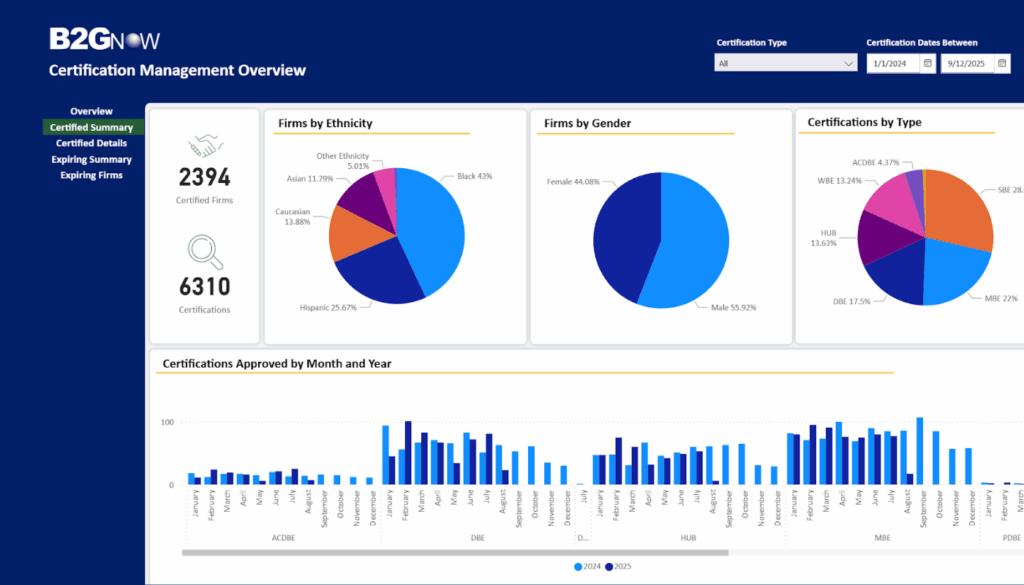
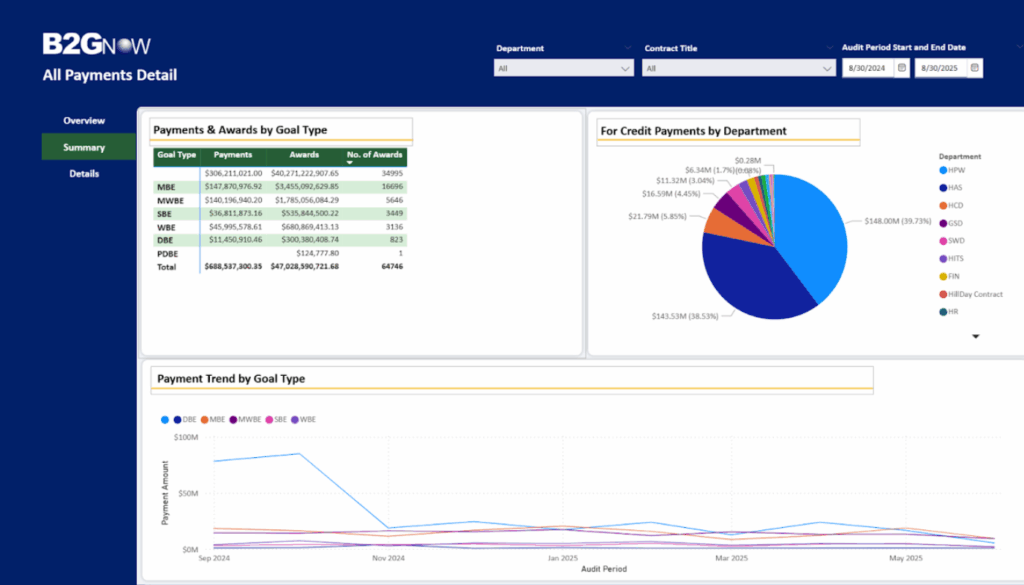
An organization can measure the success of its supplier diversity program by leveraging tools like B2Gnow Supplier Diversity Software. From states to state DOTs, cities, counties, transits, airports, education, general contractors, healthcare, and more – organizations benefit from one solution to manage vendor certifications, handle prevailing wage labor compliance, expand their vendor pool, track and measure small and diverse vendor utilization, and access over 400 system reports, PowerBI access and data libraries, export options and API/web services, allowing organizations to easily visualize business diversity and report on the impact of their program. From supplier utilization to compliance metrics, organizations that leverage B2Gnow glean valuable insights that drive strategic decision-making and provide complete visibility into activities and the success of the program.

Conclusion

Prioritizing supplier diversity in procurement involves more than just measuring compliance – it involves developing and carrying out strategies to help build a dynamic and equitable economy.  As organizations continue to refine their supplier diversity protocols, they create a more inclusive marketplace while driving meaningful progress toward their mission. For over 25 years, B2Gnow Supplier Diversity Software has brought a wealth of knowledge to help organizations start, pivot, and grow supplier diversity programs and achieve compliance goals. From states to state DOTs, cities, counties, transits, airports, education, general contractors, healthcare, and more – organizations benefit from one solution to manage vendor certifications, track small and diverse vendor utilization, manage prevailing wage labor compliance, and generate reports for program compliance and results. Organizations save up to 60%-80% of time spent on administrative tasks, freeing up time for endeavors that make a bigger difference in the communities they serve. Learn more and request a demo: www.b2gnow.com/demo

Supplier Diversity Case Study

Milwaukee Housing Authority Improves Reporting with B2Gnow

Milwaukee Housing Authority Revolutionizes Data and Reporting

A look into how the Housing Authority of the City of Milwaukee leverages B2Gnow to reduce paperwork, capture and store critical data, and streamline data retrieval and reporting for both standard and ad hoc needs. With B2Gnow, the Housing Authority simplifies complex processes, enabling efficient contract management and boosting overall operational efficiency:

  • Favorite Feature: The ability to search for contracts with ease and quickly find exactly what is needed, saving time and effort.
  • Feedback: The Housing Authority appreciates the support team’s exceptional dedication, passion for the product and the company they work for, and commitment to finding effective solutions.
  • Additional Highlight: The team values the annual DRIVE user training experience, which provides opportunities to network with industry leaders and explore innovative ways the system is used by others.

Make compliance easy. Make a difference in the community.

Discover how our vendor management, prevailing wage labor compliance, and grant management software solutions help you streamline processes and allow you to deliver greater impact to your community.


Datasheet: State of Texas – Progress Assessment Report (PAR) Feature

Digitize PAR submissions for an easier and accelerated reporting process

Benefits of the B2Gnow Progress Assessment Report (PAR) Feature:

  • Ensures confidence by adhering to Texas HUB compliance standards, including TAC rule Title 34, Part 1, Chapter 20, Subchapter D, Division 1, Rule 20.085
  • Integrates with the Contract Compliance module and automatically pulls data into the PAR form, saving time
  • Replaces manual processes with automated processes
  • Minimizes human touch points and accelerates the reporting process
  • Removes manual and duplicate data entry for the Prime.
  • Aggregates reporting into varying states based on current status and automatically loads certified HUB contractor participation into the TAC-formatted reporting.

Datasheet: eComply

Labor Compliance Solution to Easily Manage Davis-Bacon and Prevailing Wage Requirements

Benefits of eComply – the B2Gnow labor compliance solution:

  • Comprehensive – Tracks federal Davis-Bacon requirements, state and local prevailing wages, and workforce utilization goals.
  • Scalable – Available for project-specific or organization-wide use.
  • Integrated – The REST Web Services API allows seamless integration with in-house systems.
  • Safe – SHA-2 2048-bit SSL certificate on the HTTPS level, 256-bit AES SQL Server-based encryption at the database level, and extensive cyber liability coverage.
  • Track all communications and notes/comments for a more complete picture. Receive automated alerts for progress, goals reached, and records updated or changed. Create templated letters for contract status to send notifications on your company’s letterhead.
  • Configurable – Assign access roles and responsibilities on an individual basis.
  • Maintenance Free – As a Software-as-a-Service (SaaS) solution, it’s easy to get started.